NextEra Energy and Santee Cooper have successfully transitioned generative AI agents from experimental prototypes to production-grade operational tools, yielding measurable cost reductions in grid dispatch and load forecasting. During a September 2 virtual roundtable hosted by Google Cloud, representatives from both utilities detailed their deployment of Gemini Enterprise, emphasizing the shift from legacy, siloed data processes to unified, AI-optimized decision architectures.
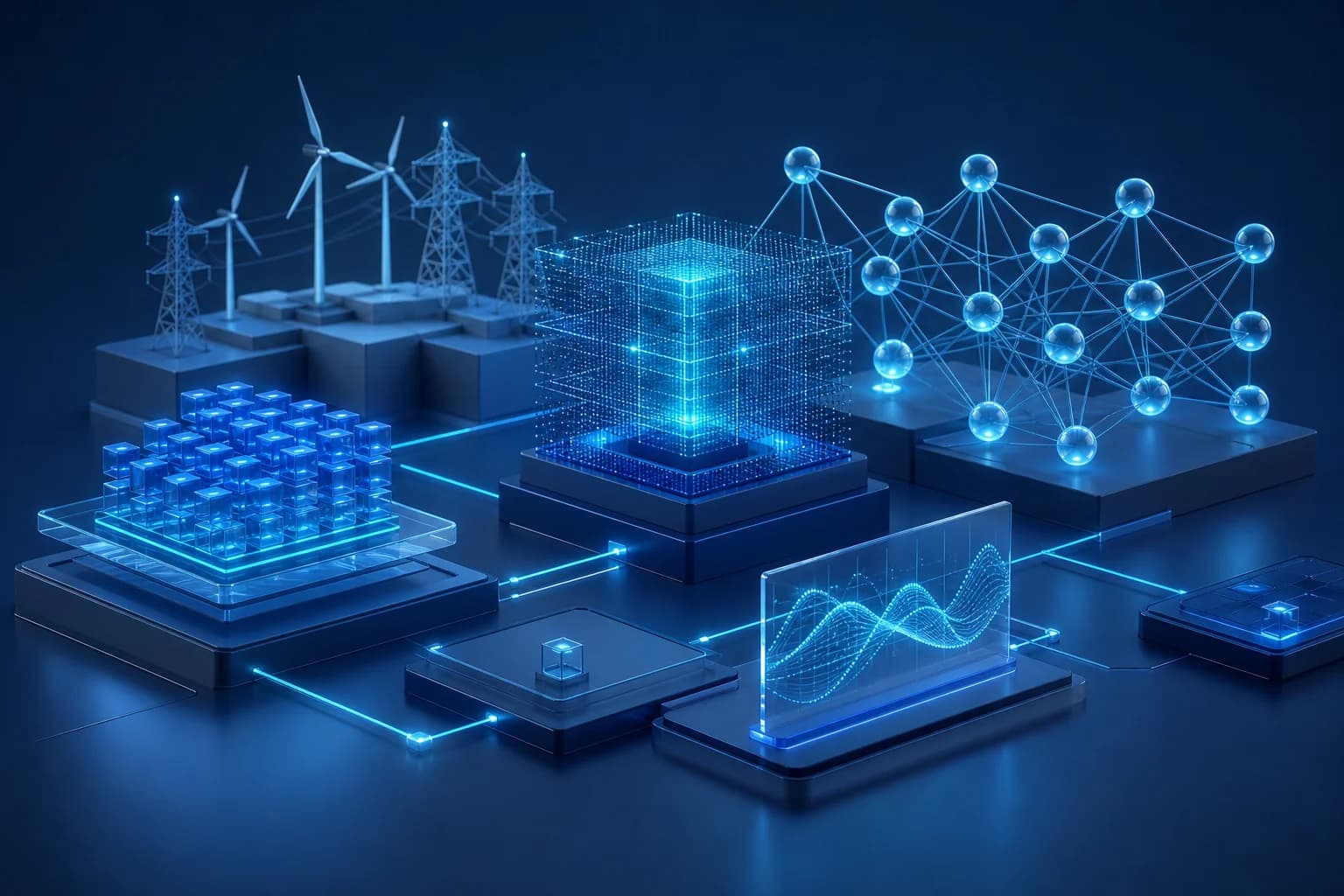
NextEra Energy implemented its Grid Composer platform across the Florida Power and Light generating fleet to optimize complex dispatch and outage scheduling. By aggregating real-time telemetry, load data, and generation profiles, the platform processes approximately 500 billion data points daily to identify dispatch efficiencies. Rich Argentieri, president of NextEra Analytics, reported that the tool, developed in under 12 weeks, has generated over $20 million in customer savings during the current calendar year.
The underlying architecture of Grid Composer, now marketed as Optos, functions by breaking down traditional departmental silos that previously isolated generation, fuel, maintenance, and trading teams. By centralizing these disparate data streams, the system prevents suboptimal dispatch decisions that occur when local optimization fails to account for global system costs. The platform utilizes advanced tensor processing units to manage the high-dimensional data inputs required for real-time power flow optimization.
Technical integration within the Grid Composer platform involves mapping complex generation constraints against volatile fuel market pricing and storage availability. By utilizing Gemini Enterprise, the system performs multi-objective optimization that balances maintenance schedules with reserve requirements, a task previously managed by disconnected teams using disparate software stacks. This unified data model allows for a more granular assessment of how individual asset performance impacts the broader grid stability.
The platform also extends to field operations, where technicians utilize voice-activated natural language interfaces to retrieve technical specifications and automate parts matching. By photographing damaged components, field staff can trigger automated lookups in the company’s parts catalog, significantly reducing downtime during turbine maintenance. This application of computer vision and natural language processing demonstrates the utility’s commitment to improving workforce efficiency through targeted AI deployment.
Santee Cooper is simultaneously deploying custom forecasting models to mitigate the financial volatility associated with weather-dependent load fluctuations. Tami Wilson, vice president and chief financial officer of Santee Cooper, noted that a single degree of temperature variance can induce a 100-megawatt swing in demand, resulting in spot-market exposure of up to $100,000 per hour. The utility is utilizing a custom model built on the WeatherNext platform to account for localized microclimates and improve predictive accuracy.
The financial forecasting team at Santee Cooper is also migrating from legacy Excel-based reporting to Gemini Enterprise-backed workflows. Wilson expects this transition to reduce model runtimes by approximately 75%, facilitating rapid scenario analysis during the utility’s $10 billion grid-expansion project. The deployment includes a governance framework requiring cross-functional oversight and mandatory training on data confidentiality and model output verification.
These implementations reflect a broader trend of utilities adopting specialized AI agents to manage high-stakes operational constraints rather than relying on general-purpose chatbots. Raiford Smith, global director of power and energy industry at Google Cloud, described this as a virtuous cycle where improvements in AI-driven computational efficiency directly enhance the tools available for security-constrained optimized power flow modeling. The integration of natural language processing allows domain experts to prototype technical solutions without requiring intermediary software engineering support.
The technical success of these deployments relies on rigorous human-in-the-loop governance and creator-editor approval models. By maintaining strict oversight of generative outputs, utilities ensure that AI agents function as force multipliers for existing staff rather than replacements for institutional expertise. This approach preserves the integrity of financial controls while enabling faster iteration on complex grid management tasks.
Future milestones for these utilities include the scaling of natural language query capabilities across broader internal systems and the continued refinement of weather-forecasting accuracy. As these models ingest more granular historical data, the potential for further reducing spot-market reliance remains a key performance indicator for both organizations. The industry will likely monitor the long-term reliability of these agent-based systems as they are integrated into increasingly complex, decentralized energy grids.