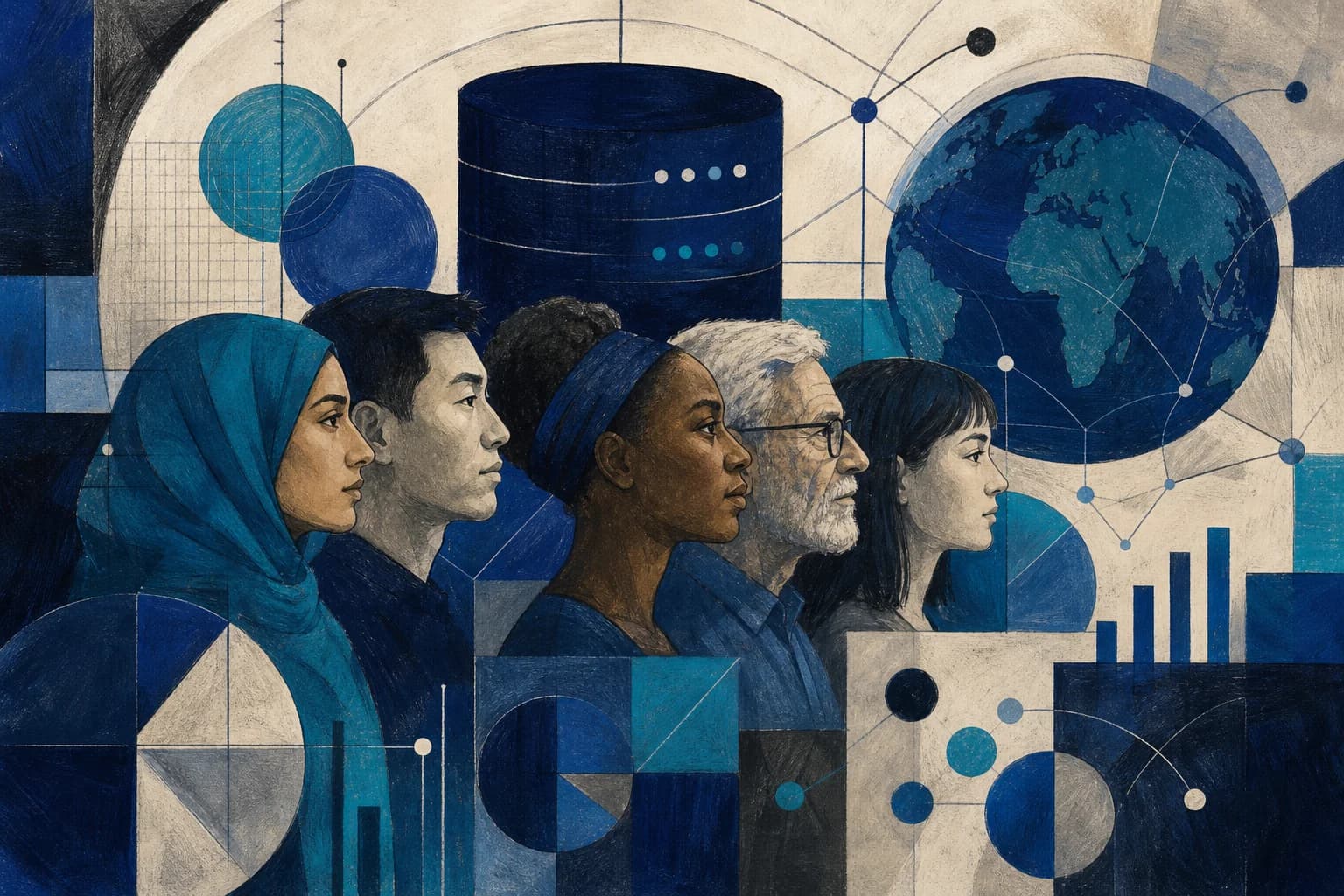
Artificial Intelligence (AI) has rapidly evolved over the last decade, driven by breakthroughs in machine learning, particularly in deep learning. AI systems today have shown remarkable proficiency in tasks such as image recognition, natural language processing, and game playing. However, the next significant leap in AI capabilities is being realized through multimodal deep learning—a paradigm that combines and processes multiple types of data inputs.
Understanding Multimodal Deep Learning
At its core, multimodal deep learning leverages data from various modalities—such as text, images, audio, and video—to create systems that can understand and generate human-like responses. Unlike unimodal systems that analyze a single type of data, multimodal models integrate different data types, which enables them to learn and reason more effectively.
For instance, consider a scenario involving a virtual assistant. A unimodal system might only interpret spoken commands, while a multimodal counterpart can process not only spoken input but also visual cues from the user’s gestures or the context of the environment.
Real-World Applications
The power of multimodal deep learning is already evident in various applications:
1. Healthcare
In the medical field, multimodal models are revolutionizing diagnostics. By integrating patient histories (text), medical imaging (images), and genomic data (numerical), these systems assist in creating a comprehensive picture of a patient’s health. For example, IBM’s Watson can analyze vast amounts of unstructured data from medical journals, patient records, and clinical studies to provide evidence-based recommendations.
2. Autonomous Vehicles
Self-driving cars utilize multiple sensors, including cameras, LiDAR, and radar, to gather information about their surroundings. Here, multimodal deep learning assimilates the visual data from cameras with distance and speed data from radar systems, significantly enhancing decision-making processes and improving safety on roads.
3. Content Creation
Artists and content creators are using multimodal models to expand their creative horizons. By combining textual prompts with visual styles, AI can generate unique artworks and even assist in writing stories or scripts. OpenAI’s DALL-E, for instance, creates striking images from text descriptions, showcasing the fusion of natural language processing and image generation.
Technological Foundations
Multimodal deep learning hinges on advanced neural network architectures. One notable approach is the Transformer model, which employs mechanisms such as self-attention to process sequential data more effectively. Recent advances like Vision Transformers (ViT) extend this architecture into the realm of image processing, bridging the gap between text and visual data.
Innovations such as CLIP (Contrastive Language-Image Pretraining) by OpenAI have further demonstrated the effectiveness of multimodal learning. CLIP can understand textual and visual data simultaneously, allowing for enhanced retrieval and classification across both modalities. This capability enables cutting-edge applications like image searches using descriptive phrases, putting a spotlight on how flexible and powerful these models are.
The Challenges Ahead
Despite its potential, multimodal deep learning is not without challenges. Integrating data from different modalities often involves various complications, including data alignment, synchronization, and the need for large-scale datasets to train such complex models. Furthermore, ethical considerations regarding data privacy and bias also demand careful attention, particularly when AI systems make critical decisions based on human inputs.
Another challenge lies in the interpretability of multimodal models. Understanding how these systems reach conclusions remains a significant hurdle; lacking explainability can breed mistrust and impede widespread adoption in sensitive domains like healthcare and law enforcement.
The Future of AI with Multimodal Learning
The future, however, looks promising. As multimodal deep learning continues to mature, its applications will likely expand into even more sectors. For instance, disaster response efforts could be enhanced through real-time data integration from social media, weather systems, and satellite imagery, allowing for more effective and timely interventions. Virtual reality (VR) and augmented reality (AR) experiences will become richer as AI systems seamlessly integrate visual, auditory, and textual inputs, creating immersive interactions.
“The convergence of multimodal learning will enable AI to understand the world in a manner that is more akin to human cognition, opening doors to new possibilities.” – AI Research Expert
Conclusion
In conclusion, multimodal deep learning is at the forefront of redefining what artificial intelligence can achieve. By harnessing the power of diverse data types, it propels AI into a new era of understanding and interaction. As the technology progresses, the emphasis must not only be on pushing the boundaries of capability but also ensuring that ethical, interpretive, and practical challenges are addressed. The future may indeed be bright—if we can navigate the complexities of creating responsible and robust AI systems.