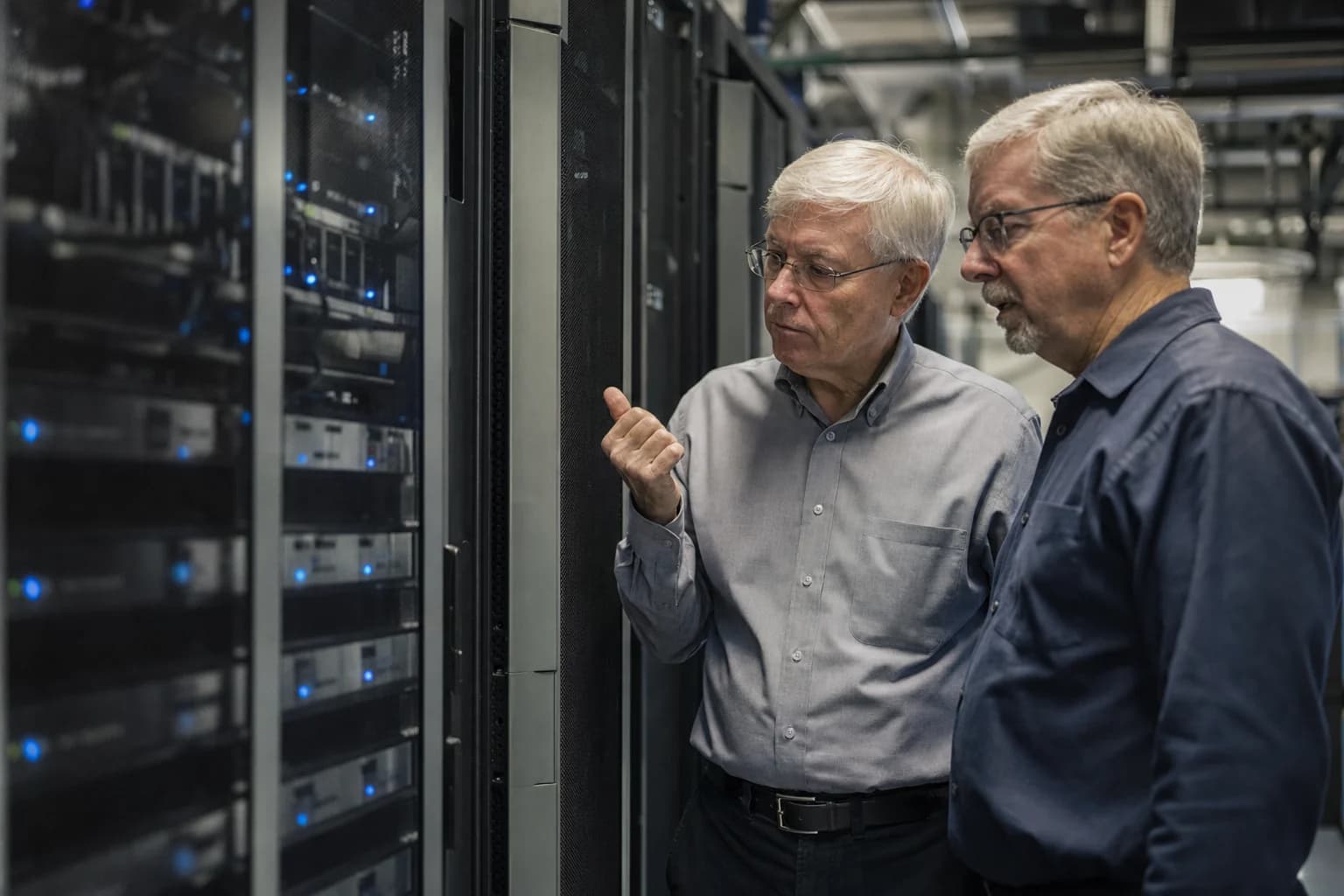
Simplismart, a developer of AI inference infrastructure, announced on October 27, 2026, the completion of a $14 million Series B funding round led by Dallas Venture Capital. The capital injection includes participation from NVIDIA, Accel, Shastra VC, and Micromax, signaling institutional confidence in the firm’s software layer designed to optimize the execution of large-scale machine learning models.
The company specializes in the software stack positioned between generative AI models and underlying GPU hardware. Its primary technical offering consists of a modular inference engine that allows engineers to configure model execution parameters based on specific requirements for latency, throughput, and computational expenditure. This engine operates in tandem with an orchestration platform that manages deployment across hybrid environments, including both cloud-based and on-premises infrastructure.
The firm reported a 14-fold increase in its annualized revenue run rate over the preceding six months. Current production deployments on the platform include multimodal, voice, and video applications from organizations such as HeyGen, Higgsfield, InVideo, Shiprocket, Apna, and Ema. These implementations leverage the platform’s ability to handle complex inference tasks while maintaining operational reliability under varying demand loads.
A notable technical implementation involves the customer communications platform Exotel, which transitioned from closed-model APIs to an open-source model optimized through the Simplismart infrastructure. By utilizing GPU fractionalization techniques, Exotel reported a reduction in cost per minute of up to 57 percent compared to proprietary API alternatives. Furthermore, the optimization efforts achieved a latency reduction, bringing response times from 1.1 seconds down to under 300 milliseconds.
The company maintains a strategic partnership with NVIDIA to facilitate the deployment of AI infrastructure at scale. Unlike providers that operate by purchasing or reserving GPU capacity for resale, Simplismart focuses exclusively on the software layer that transforms third-party GPU fleets into production-ready AI environments. This model is currently utilized by Yotta, where the software serves as the serverless inference layer for the Shakti Studio platform.
Amritanshu Jain, co-founder and chief executive officer of Simplismart, emphasized that the competitive advantage in the current market is derived from the efficiency of the execution environment. He noted that the company has spent four years refining the software interface between the model and the GPU to ensure that workloads remain performant as they scale. This focus on the underlying mechanics of inference is intended to address the growing economic pressures faced by enterprises running large-scale AI applications.
Devansh Ghatak, co-founder and chief technology officer of Simplismart, identified the development of a dynamic GPU scheduling layer as a primary objective for the new funding. This technology aims to match specific AI workloads with available compute capacity across disparate regions and time zones. The goal is to improve the utilization rates of GPU infrastructure for cloud providers while maintaining the performance requirements of individual model architectures.
Dayakar Puskoor, managing partner at Dallas Venture Capital, stated that the firm views inference as a critical factor in the evolving economics of artificial intelligence. The ability to minimize the cost of inference while maximizing throughput remains a significant technical hurdle for enterprise-grade AI adoption. Simplismart’s focus on software-defined infrastructure provides a mechanism for cloud providers to offer managed services without the need to develop proprietary stacks from the ground up.
The company intends to use the capital to strengthen its cloud-provider partnerships and broaden its footprint across North America and global markets. Future development will likely focus on the integration of sovereign AI partnerships, which require specialized infrastructure configurations to meet regional data residency and compliance standards. The industry will monitor the firm’s progress in scaling its dynamic scheduling layer, which represents a significant step toward more efficient, automated GPU resource allocation.