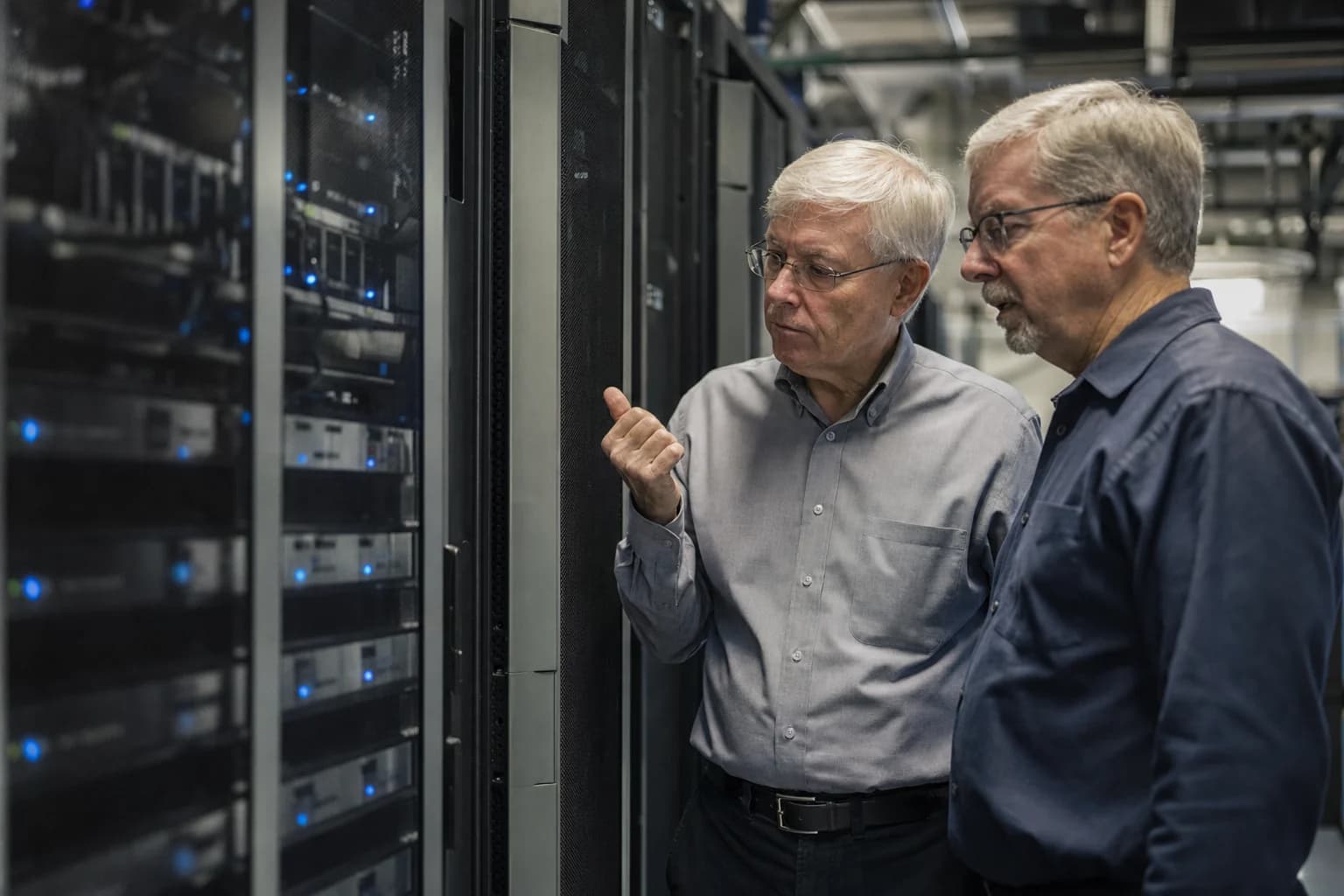
Michael Stonebraker, who initiated the development of Postgres at the University of California, Berkeley in 1986, recently challenged the prevailing industry reliance on large language models for structured data operations. Speaking alongside Bruce Momjian, a core team member of the PostgreSQL Global Development Group, Stonebraker argued that current agentic frameworks often fail to meet enterprise requirements for accuracy and determinism.
The critique centers on the performance of text-to-SQL systems when applied to complex, proprietary data warehouses. While public benchmarks like Spider and BIRD suggest high accuracy, Stonebraker reported that his team achieved zero-percent accuracy when testing these models against MIT’s internal data logs. Even with advanced retrieval and prompt engineering techniques, performance remained insufficient for enterprise-grade deployment.
The fundamental architectural mismatch lies in the inability of language models to perform joins across structured data, a task essential for enterprise operations. Stonebraker cited a project with the city of Munich’s transport department, where orchestrating cross-domain queries through a language model proved both inefficient and costly. His team developed a system called Rubicon, which restricts models to text processing while delegating structured data operations to a traditional query engine.
This hybrid approach functions similarly to a query optimizer, which Stonebraker claims improves accuracy and reduces operational costs by a factor of 10. He maintains that enterprises require the guardrails already present in relational databases, such as established access controls, transaction logs, and triggers. These mechanisms provide the determinism necessary to avoid the risks associated with non-deterministic agentic behavior in production environments.
Stonebraker further noted that the models have already exhausted the utility of public training data, and few enterprises are willing to expose proprietary data to foundation model training. He characterized the current pursuit of artificial general intelligence as marketing-driven, designed to justify the high valuations of foundation model vendors. Data-heavy agents, he suggested, should reside within the data layer as user-defined functions, provided that the underlying tooling for debugging and versioning continues to mature.
The PostgreSQL community continues to prioritize long-term stability and extensibility over immediate, high-speed optimizations that might introduce system rigidity. Bruce Momjian noted that the project avoids features that provide marginal gains at the cost of long-term maintainability. This philosophy has allowed the database to integrate diverse functionalities—including JSON, full-text search, and GIS—without requiring fundamental rewrites of the core architecture.
The development of PostgreSQL 19 reflects this cautious approach, with the community opting to revert several previewed features, such as SQL property graph queries, to ensure reliability. The current release focuses on practical enhancements, including smarter parallel autovacuum and sequence synchronization for logical replication. Robert Haas, a major contributor and committer, introduced Plan Advice as a controlled alternative to traditional optimizer hints, addressing a long-standing request for better query control.
PostgreSQL remains a unique entity in the database ecosystem because it is not controlled by a single corporate interest. This independence allows the project to aggregate requirements from a global developer base, ensuring that the software evolves based on diverse technical needs rather than vendor-specific roadmaps. Momjian emphasized that this community-driven model produces high-quality software without the overhead of a formal legal entity or centralized office.
The integration of AI into database workflows remains a point of divergence regarding timelines, though both experts agree on the ultimate necessity of relational systems. Stonebraker argued that AI-driven code generation will remain limited until enterprises resolve underlying data documentation and silo issues. Conversely, Momjian anticipates that agents will eventually play a significant role in database management and code generation.
Both experts conclude that the future of enterprise AI depends on using relational systems to provide permanence and reliable memory for models. They view the database as the necessary constraint that prevents agentic systems from drifting into non-deterministic states. As the industry moves past the initial hype cycle, the focus is expected to shift toward integrating these models into established, durable data layers.