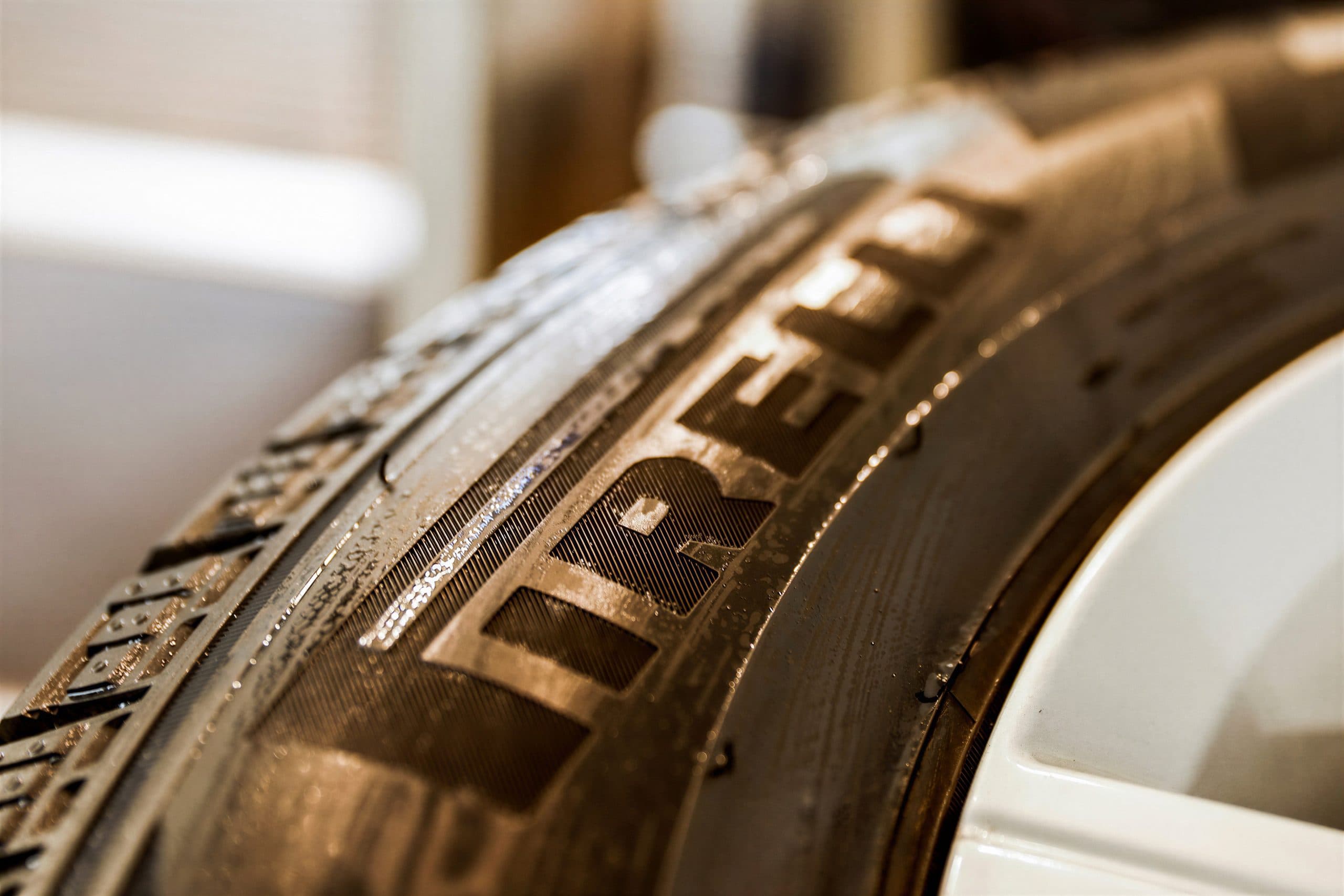
Italian tire manufacturer Pirelli executed a highly strategic corporate acquisition on Wednesday, securing a thirty percent equity stake in Swedish artificial intelligence firm Univrses with an explicitly embedded option for future majority control to systematically integrate advanced computer vision architectures into its proprietary Cyber Tyre sensor ecosystem. This sophisticated financial maneuver, reported by Reuters, fundamentally bridges traditional automotive hardware manufacturing with cutting-edge spatial deep learning methodologies, establishing a novel edge-computing paradigm where localized pneumatic sensor data interfaces directly with high-dimensional environmental mapping algorithms to optimize autonomous navigation protocols across diverse terrains.
The technical nucleus of this cross-border corporate partnership revolves around the direct algorithmic fusion of Univrses’ proprietary 3DAI Engine with the existing hardware infrastructure of the Cyber Tyre platform, creating a multimodal sensor network capable of processing complex road telemetry directly at the vehicular edge. Giulio Piovaccari, correspondent at Reuters, explicitly noted in his dispatch that the system “collects data from sensors inside tyres and communicates in real time with vehicle electronics and cloud systems,” thereby establishing a continuous, ultra-low-latency feedback loop essential for dynamic state estimation and predictive vehicle dynamics.
By rigorously leveraging the spatial deep learning capabilities inherent within the Univrses 3DAI Engine, the augmented tire infrastructure transcends basic pressure or temperature monitoring to facilitate high-precision three-dimensional positioning, semantic mapping, and real-time environmental reconstruction for sophisticated autonomous vehicle control stacks. This deep integration effectively transforms the traditional pneumatic contact patch into a highly distributed array of intelligent diagnostic nodes, utilizing advanced convolutional neural networks to interpret micro-vibrations and surface friction coefficients as actionable spatial intelligence for the central advanced driver-assistance systems governing the vehicle’s trajectory.
Beyond enhancing individual vehicular telemetry and localized control systems, the aggregated data pipelines generated by this advanced computer vision integration are specifically engineered to supply municipal road authorities with granular, anonymized infrastructural analytics, thereby optimizing the deployment of critical maintenance resources across highly complex urban grids. The systematic application of these predictive machine learning models to macroscopic traffic patterns is theoretically projected to significantly diminish the statistical probability of severe road accidents by preemptively identifying structural anomalies, asphalt degradation, and localized environmental hazards long before they precipitate catastrophic mechanical failures.
Validating the efficacy of this macro-level diagnostic framework, Pirelli previously initiated a comprehensive road network monitoring initiative in the southern Italian Puglia Region scheduled for full operational deployment in 2025, utilizing the combined algorithmic and hardware technologies developed by both collaborating corporate entities. This expansive regional deployment serves as a critical empirical testbed for evaluating the scalability and robustness of distributed spatial deep learning models in entirely uncontrolled, real-world environments, providing machine learning researchers with massive, high-variance datasets to continuously refine the underlying computer vision architectures against diverse meteorological and topographical variables.
The strategic acquisition of a specialized European artificial intelligence asset functions as a critical mechanism for Pirelli to secure its proprietary technological supply chains amidst an ongoing, highly publicized governance conflict between its Italian executive board and its prominent Chinese corporate shareholders. This internal corporate friction stems directly from escalating international regulatory pressures, specifically concerning the stringent United States legislative frameworks that systematically restrict the deployment, integration, and cross-border transfer of Chinese-origin technologies within the critical infrastructure of the global automotive and autonomous transportation sectors.
From a rigorous machine learning and systems engineering perspective, embedding spatial deep learning algorithms directly into the tire’s localized processing unit represents a profound paradigm shift in autonomous vehicle architecture, effectively mitigating the severe computational bottlenecks traditionally associated with transmitting raw, high-bandwidth sensor telemetry to centralized cloud servers. By executing complex computer vision inferences at the extreme edge of the vehicular network, automotive engineers can drastically reduce critical inference latency, ensuring that the autonomous control algorithms receive instantaneous, deterministic updates regarding dynamic road surface conditions and transient friction coefficients required for safe navigation.
The underlying methodological complexity of translating localized kinetic data into coherent, high-fidelity three-dimensional environmental maps requires highly specialized neural network architectures capable of seamlessly fusing asynchronous time-series data from the internal tire sensors with the complex optical inputs processed by the Univrses 3DAI Engine. Resolving these intricate, multi-modal sensor fusion challenges demands exceptionally robust calibration protocols and sophisticated probabilistic filtering techniques, ensuring that the spatial deep learning models maintain remarkably high confidence intervals even when subjected to the extreme vibrational noise and thermal fluctuations inherent in high-speed automotive transit.
While the specific financial parameters and valuation metrics of the initial thirty percent equity acquisition remain strictly undisclosed by the participating corporations, the explicitly structured option for Pirelli to eventually secure a commanding majority stake indicates a resolute, long-term strategic commitment to internalizing these advanced computer vision capabilities. Industry analysts and machine learning researchers will rigorously monitor the forthcoming empirical benchmarks generated by the 2025 Puglia Region deployment to objectively assess whether this hybrid hardware-software architecture can genuinely achieve the stringent reliability and accuracy metrics required for Level 4 and Level 5 autonomous driving applications.
Future iterations of the integrated Cyber Tyre platform will inevitably necessitate the development of even more sophisticated unsupervised learning algorithms capable of autonomously adapting to entirely novel surface anomalies without requiring continuous manual data annotation or extensive computational retraining of the foundational spatial deep learning models. Ultimately, the successful commercialization and widespread deployment of this integrated computer vision technology could fundamentally redefine the standard sensor topology of next-generation autonomous vehicles, establishing intelligent, algorithmically augmented tires as an absolutely indispensable component of the modern vehicular perception and navigation stack.