LLMsagentic ai
Nvidia Optimizes Local Agentic Workflows With Nemotron 3.5 Lightning
Nvidia introduces a specialized model architecture and routing library designed to facilitate high-volume agentic tasks on local hardware.
4 min read
Nvidia introduces a specialized model architecture and routing library designed to facilitate high-volume agentic tasks on local hardware.
Nvidia expanded its Nemotron 3 architecture on August 11, 2026, with the release of Nemotron 3.5 Lightning, a model specifically engineered for high-volume agentic tasks. This iteration emphasizes specialized execution, enabling developers to deploy complex reasoning capabilities in local environments to address security and privacy requirements.
The model architecture achieves a density of knowledge comparable to the larger Nemotron 3 Ultra while maintaining the compact footprint of the Nano variant. Kari Briski, vice president of generative AI at Nvidia, confirmed during a technical briefing that the model is designed to operate efficiently on local hardware. This architectural decision directly supports the trend of moving agentic workloads away from centralized cloud infrastructure to reduce latency and enhance data control.
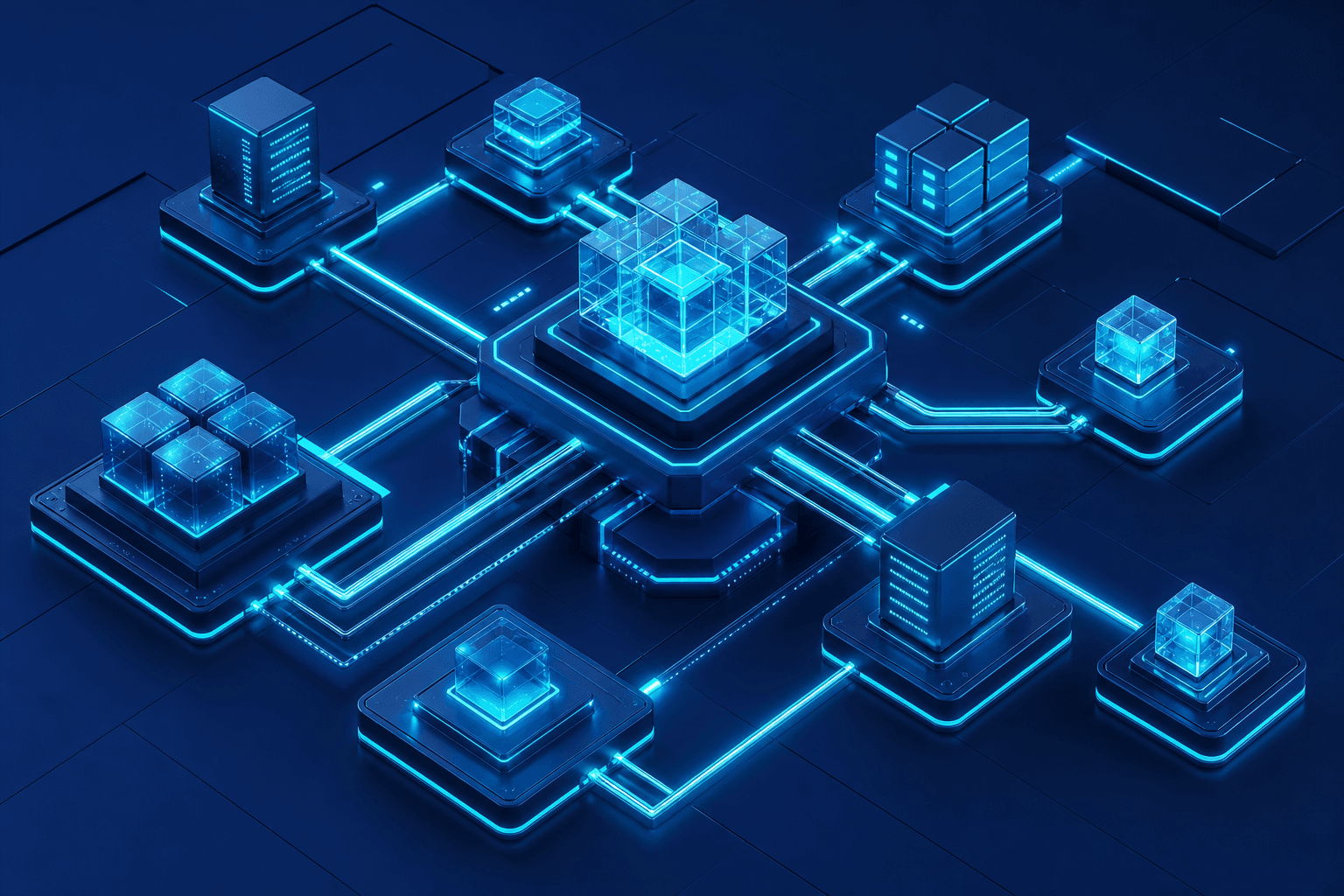
Nvidia introduced the NeMo Switchyard library alongside the model to facilitate precise task routing. This library functions as a sophisticated orchestration layer, allowing the model to direct specific sub-tasks to optimized parameters within the agentic workflow. By decoupling the routing logic from the base model, Nvidia provides engineers with granular control over computational resource allocation during complex reasoning chains.
The release arrives as the industry shifts toward open-weight models, driven by both security concerns and the rising costs of proprietary frontier models. Nvidia is positioning the customizability of Nemotron 3.5 Lightning as a functional security advantage. This approach contrasts with the traditional view that open-weight models inherently increase the risk of unauthorized data exposure or system misuse.
Market dynamics are currently favoring open-weight alternatives, particularly as startups like DeepSeek adjust pricing models for their own offerings. The introduction of NeMo Switchyard suggests that Nvidia intends to capture the developer ecosystem by providing a more integrated toolset for local deployment. This strategy addresses the technical friction often associated with managing complex agentic pipelines outside of managed cloud environments.
Engineers utilizing the NeMo Switchyard can now implement dynamic routing policies that prioritize specific model weights based on task complexity. This mechanism allows for a tiered execution strategy where simple queries are handled by smaller, faster model instances, while complex reasoning tasks are routed to more robust parameters. Such efficiency gains are critical for maintaining performance in high-throughput environments where token costs and latency are primary constraints.
The industry transition toward specialized, domain-specific AI agents prioritizes latency and data sovereignty over the monolithic scale of general-purpose models. Enterprises are increasingly moving beyond general-purpose architectures, seeking efficient, locally-run systems that can be audited and fine-tuned for specific operational constraints. Nvidia is effectively betting that the next phase of agentic AI will be defined by the ability to orchestrate smaller, highly capable models locally rather than relying exclusively on massive, cloud-based systems.
The success of this model depends on the performance of the NeMo Switchyard routing logic in multi-agent environments. If the library effectively minimizes latency during task handoffs, it could establish a new standard for local agentic performance. The integration of these tools suggests a move toward a modular design philosophy where individual components of the AI stack are optimized for specific operational constraints.
Researchers at the Center for AI Standards and Innovation suggest that the shift toward local orchestration represents a fundamental change in how developers manage model security. By keeping data within the local perimeter, organizations mitigate the risks associated with transmitting sensitive information to third-party APIs. This development aligns with broader efforts to standardize secure, agentic workflows across both enterprise and research sectors.
Future development cycles will likely focus on the interoperability of NeMo Switchyard with third-party open-weight models. The ability to integrate diverse architectures into a single, cohesive routing framework remains a critical hurdle for widespread adoption. Analysts will monitor how this ecosystem matures as more labs release specialized, smaller models designed for local execution.