LLMsartificial intelligence
Architecting Enterprise AI Through Orchestration Layering
Enterprises are moving toward modular orchestration architectures to manage the complexity of durable execution and agentic reasoning.
4 min read
Enterprises are moving toward modular orchestration architectures to manage the complexity of durable execution and agentic reasoning.
Analytics Insight reports that the AI orchestration market is projected to grow from $14 billion in 2026 to over $60 billion by 2034, driven by the demand for scalable enterprise deployments. This capital influx has forced engineering teams to distinguish between disparate functional requirements in production environments, moving away from monolithic platforms that attempt to solve every failure model simultaneously.
Temporal has emerged as the industry standard for durable execution, providing the state persistence necessary for long-running business processes. By allowing workflows to survive server restarts and extended human approval cycles, it addresses the fundamental volatility inherent in distributed systems, a capability that OpenAI reportedly utilizes for its Codex production environment.
LangGraph occupies the reasoning layer, modeling agentic behavior as explicit state graphs with nodes and edges. This framework enables complex branching logic and checkpointing, which are essential for managing the non-deterministic nature of large language model outputs that traditional schedulers cannot handle.
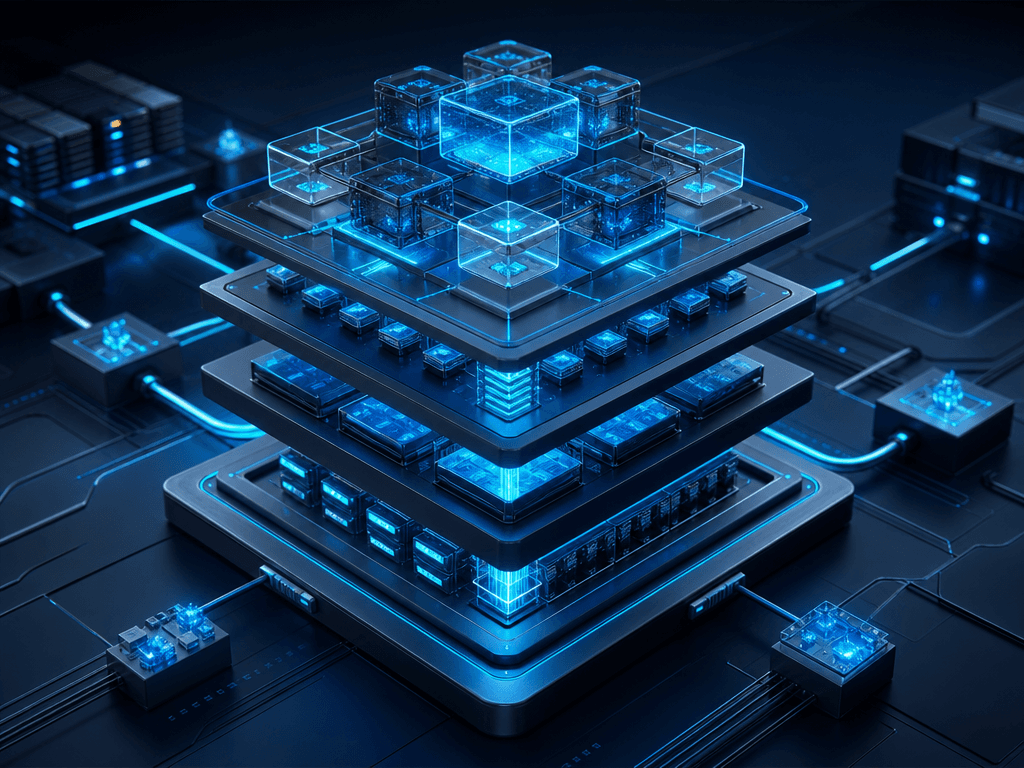
The current production standard involves a two-layer pattern where Temporal manages macro-orchestration while LangGraph handles the internal reasoning loop. This combination allows for infrastructure-grade reliability without sacrificing the flexibility required for model-decided task execution, effectively integrating the reasoning loop with the execution runtime.
Data pipelines continue to rely on established tools like Apache Airflow and Dagster for batch processing and dependency management. These systems remain distinct from agentic frameworks, as they prioritize deterministic execution and high-throughput data movement over the interactive, stateful reasoning required by modern AI agents.
The market is seeing a shift toward specialized tooling rather than all-in-one platforms that attempt to solve every failure model. Engineering teams are increasingly adopting a modular approach, assigning specific orchestration tasks to tools built for those exact constraints, such as using n8n for workflow automation or Microsoft Agent Framework for specific integration tasks.
Technical implementations of state management in Temporal rely on event sourcing, where the workflow history is persisted as a sequence of events, allowing the system to replay and recover state after any interruption. In contrast, LangGraph manages state through a shared memory object that acts as a blackboard for the agent, enabling nodes to read and write intermediate results during the reasoning process without requiring the heavy persistence overhead of a full workflow engine.
Effective enterprise deployment requires a clear distinction between predictable flowcharts and autonomous agent loops. Teams that conflate these two categories often encounter significant technical debt, as they force schedulers to act as runtimes or agent frameworks to function as databases, leading to fragile systems that fail under load.
The primary challenge for developers remains the integration of deterministic code with the probabilistic outputs of modern models. This friction necessitates workarounds for state persistence, particularly when tracing token costs or evaluating prompt quality across long-running processes where the model might decide the next step in a sequence.
System reliability in production hinges on the ability to debug agent failures through time-travel mechanisms and granular state inspection. Tools like LangGraph Studio provide visibility into why an agent deviated from its intended path, a feature that is increasingly separating successful production deployments from failed prototypes.
Decoupling the reasoning layer from the execution layer ensures system integrity even when the underlying model produces unexpected or suboptimal results during a multi-step task. This architectural separation allows engineers to swap out individual model components or adjust prompt logic without disrupting the underlying durable execution state.
As enterprise adoption of agentic workflows increases, the focus will shift toward standardizing the interfaces between durable execution engines and agentic reasoning frameworks to ensure maintainability at scale across diverse enterprise environments. This evolution will likely drive the development of unified API patterns that allow these disparate systems to communicate state changes more efficiently.
Organizations must prioritize the specific failure modes that currently impact their operational costs. The most effective architectures are those that remain boring by design, utilizing specialized tools for their intended purpose rather than attempting to force a single platform to handle every layer of the stack.