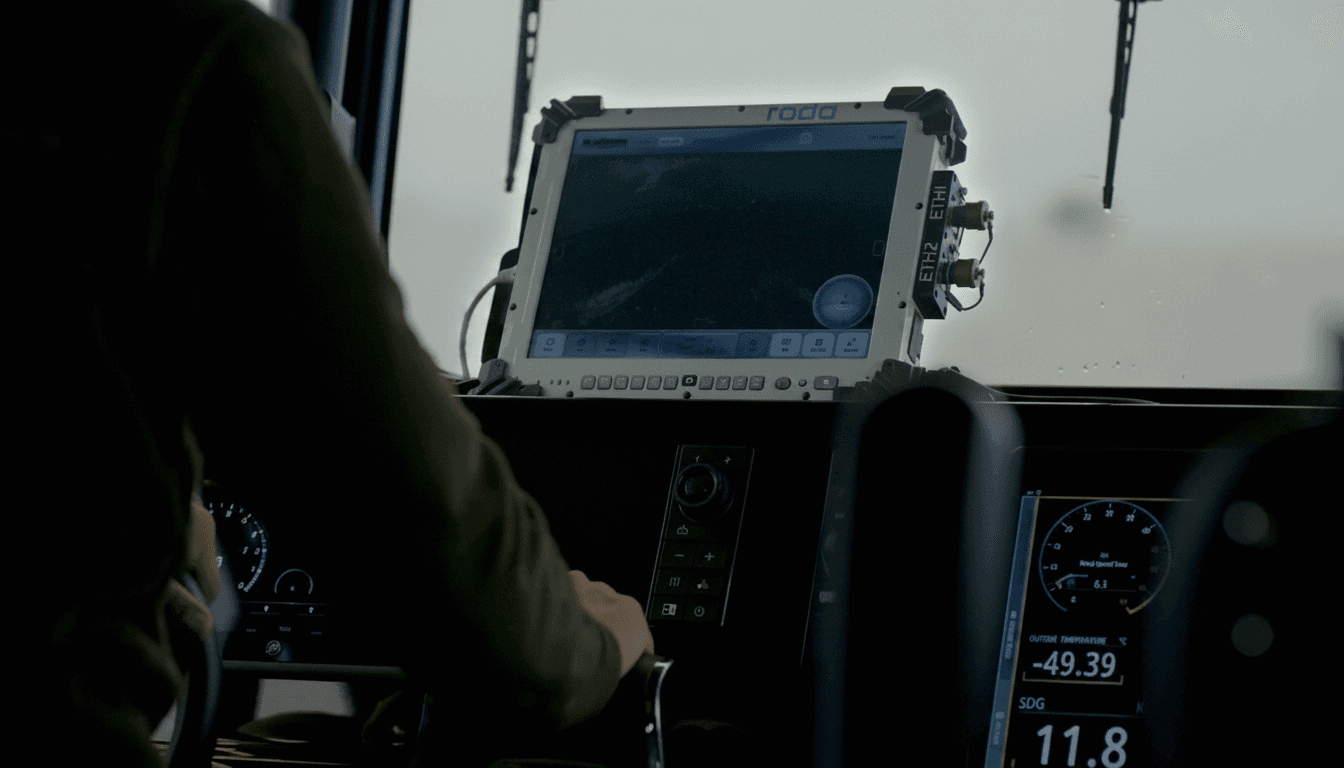
Havelsan has introduced BLUEVISION, a modular situational awareness architecture designed to augment maritime navigation through advanced computer vision and intelligent sensor fusion. The system addresses the inherent limitations of traditional radar by identifying low-signature targets such as small vessels, buoys, and individuals in the water that typically fall below the detection threshold of conventional maritime hardware.
The technical core of the platform relies on the integration of high-resolution thermal and daylight optical sensors with Automatic Identification System data. By synthesizing these disparate data streams, the system generates a unified maritime picture that mitigates the noise and signal-loss issues common in legacy radar systems. The architecture utilizes a high-performance processing unit capable of real-time object classification and geographic localization, ensuring consistent performance across varying environmental conditions.
Machine learning models within the system are trained to perform automated classification of surface objects, allowing for the differentiation between static buoys and dynamic vessels. This classification capability is coupled with a decision-support layer that provides visual and auditory alerts when the system calculates a collision risk. The software infrastructure is designed for continuous learning, enabling the deployment of updates that refine detection accuracy as new operational data becomes available.
Hardware modularity serves as a primary design constraint, facilitating integration across diverse platforms ranging from commercial container ships to uncrewed surface vehicles. The system feeds processed data into the ADVENT Combat Management System, which serves as the central node for autonomous navigation and tactical decision-making. This integration allows for the automated execution of search-and-rescue protocols without requiring constant manual oversight.
Deployment on the SANCAR Armed Uncrewed Surface Vehicle demonstrates the practical application of this computer vision framework in high-stakes maritime environments. Beyond autonomous navigation, the system supports specialized modules for intelligence, surveillance, and reconnaissance, including the monitoring of submarine periscopes. The software-defined nature of the platform allows it to adapt to evolving mission requirements, reducing the probability of human error during complex maneuvers.
According to reports from Anadolu Agency, the system provides a scalable solution for maritime safety, offering a reliable alternative to traditional lookout methods. By replacing or augmenting human observation with automated visual processing, the technology provides a measurable improvement in operational efficiency at sea. The integration of these vision-based models into existing naval frameworks signifies a shift toward more autonomous, data-driven maritime operations.
The efficacy of this system rests on its ability to fuse optical data with existing sensor networks, creating a more comprehensive spatial awareness model. Researchers note that the shift toward software-based intelligence in maritime platforms represents a significant transition in how navigation safety is managed. The modularity of the framework ensures that as new computer vision models are developed, they can be integrated into existing fleets without requiring extensive hardware overhauls.
Technical analysts observe that the reliance on continuous software updates suggests a long-term commitment to refining the underlying neural networks. By leveraging deep learning architectures for object detection, the system maintains high precision even in low-light or high-clutter environments. This capability is essential for modern maritime security where the ability to distinguish between benign and hazardous objects in real time is a critical operational requirement for all vessels.
Future development cycles for the platform will likely focus on increasing the granularity of object classification and improving performance in extreme weather scenarios where optical clarity is compromised. Stakeholders will monitor the system’s performance in diverse maritime theaters to determine the broader viability of AI-driven navigation aids in international shipping lanes. The ongoing refinement of these algorithms remains a focal point for Havelsan as it seeks to expand the operational envelope of its autonomous maritime solutions through iterative testing and data acquisition.