NLPai agents
Gremlin Deploys Agentic Framework for Automated Reliability Engineering
The new Foresight AI platform utilizes specialized agent roles to automate fault-injection testing and remediation validation within distributed systems.
4 min read
The new Foresight AI platform utilizes specialized agent roles to automate fault-injection testing and remediation validation within distributed systems.

Reliability management firm Gremlin announced the general availability of Foresight AI on October 11, 2026, introducing an agentic architecture designed to identify system vulnerabilities and validate remediation strategies. The platform functions as an extension of Gremlin’s existing infrastructure, integrating automated testing cycles to maintain service resilience without requiring universal distributed systems expertise among individual developers.
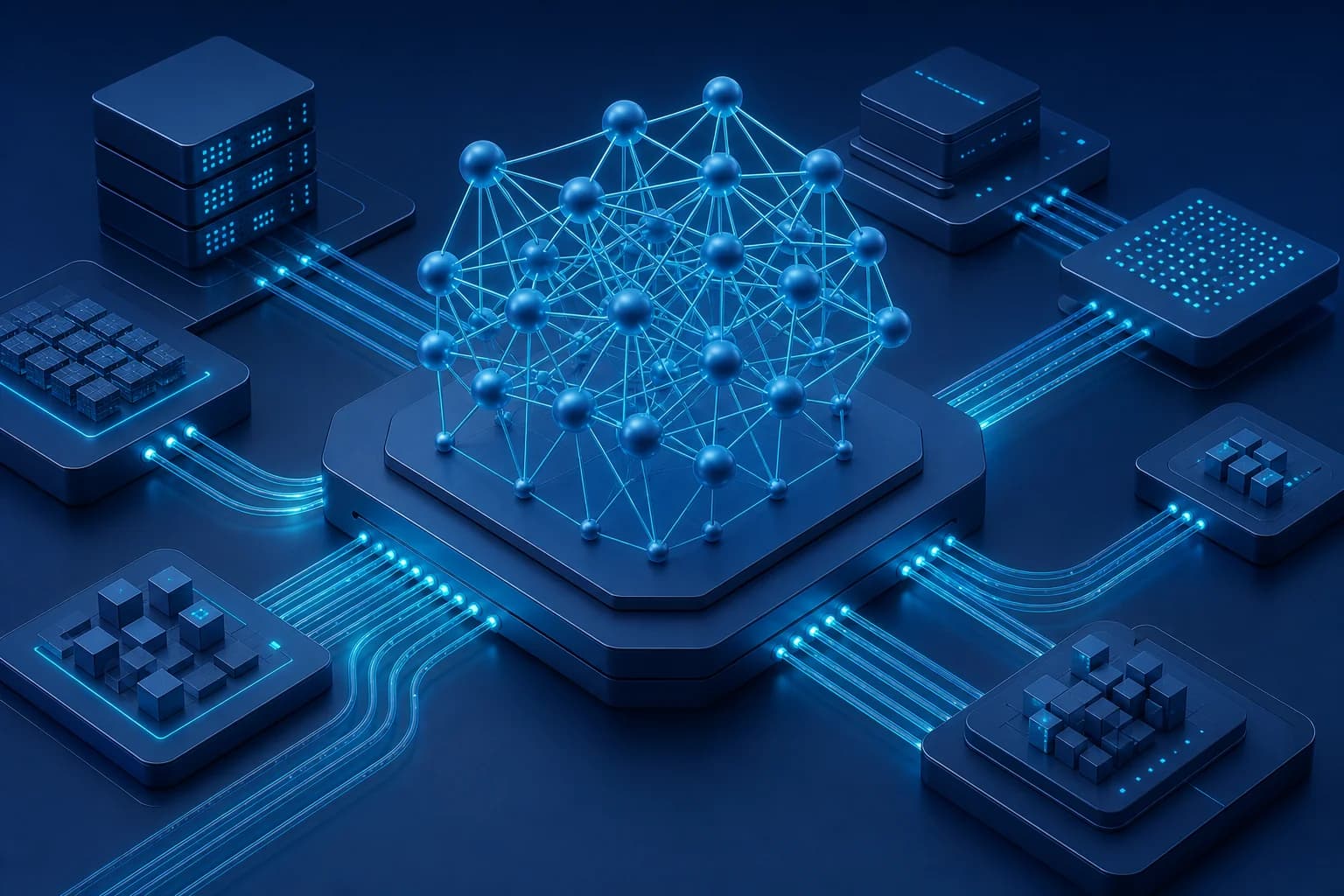
The product architecture distributes operational tasks among four distinct agent roles to manage the lifecycle of reliability testing. An Analyst agent aggregates service telemetry to identify potential failure vectors, while a Tester agent manages the execution schedule for fault-injection experiments. Once a test concludes, an Operator agent interprets the resulting data to propose specific configuration changes or code remediations. A Technical Program Manager agent oversees global test coverage and tracks reliability risk metrics across organizational silos.
Foresight AI derives its decision-making logic from the proprietary Failure Atlas, a dataset compiled from over a decade of fault-injection experiments across tens of thousands of distributed systems. Gremlin engineers confirmed that the underlying large language models are utilized exclusively for natural language processing, summarization, and search tasks rather than training on proprietary customer system data. This separation ensures that the agents operate within the constraints of established reliability patterns rather than relying on probabilistic generation for critical infrastructure decisions.
The platform implements a closed-loop validation mechanism to ensure the efficacy of proposed fixes. When an agent identifies a weakness and suggests a remediation, the system requires human authorization before applying any changes to the production environment. Following the implementation of a fix, the system automatically reruns the original test to verify that the vulnerability has been successfully mitigated. This supervised approach maintains an explicit human-in-the-loop requirement for all critical infrastructure modifications.
Gremlin CEO and co-founder Kolton Andrus emphasized the necessity of proactive failure prevention in the context of accelerated software deployment cycles. By automating the repetitive aspects of reliability engineering, the platform aims to reduce the frequency of production incidents that often occur when code reaches production without rigorous review. The system also provides natural-language reporting interfaces, allowing teams to generate dashboards and charts that visualize reliability scores and progress on risk remediation.
Industry analysts have noted the distinction between reactive observability tools and the proactive nature of fault injection. While standard observability platforms typically analyze telemetry after an incident occurs, fault injection creates controlled failure conditions to observe system behavior in real-time. Jason English, an analyst at Intellyx, highlighted that while automated tools can coordinate testing, they do not replace the need for shared organizational ownership regarding risk tolerance and remediation strategy.
The integration of AI agents into reliability engineering reflects a broader industry shift toward automated resilience checks within CI/CD pipelines. Other organizations, including Google Cloud and Wix, have explored similar methodologies for log interpretation and automated remediation, often maintaining strict human oversight for deployment decisions. This contrasts with more autonomous agentic proposals, such as those discussed by Cloudflare, which envision agents managing larger portions of the maintenance and deployment lifecycle.
Technical observers suggest that the efficacy of such agentic systems depends on the ability of engineers to configure agents and interpret their performance metrics accurately. Sandip Bhattacharya, an engineer familiar with SRE automation, noted that the introduction of AI-driven reliability tools creates a new layer of system complexity that requires ongoing evaluation by human specialists. The success of Foresight AI will ultimately be measured by its ability to reduce false-positive rates and provide actionable insights in complex, high-scale environments.
Future development will likely focus on the integration of more sophisticated diagnostic capabilities and the expansion of the Failure Atlas to encompass emerging distributed system architectures. Stakeholders should monitor the platform’s performance in varied production environments to determine if the supervised agentic model effectively balances automation with the necessary safety controls required for mission-critical infrastructure.