In the last decade, artificial intelligence (AI) has transitioned from a field of skepticism and trial to one of tangible, transformative advancements. At the heart of this evolution lies a game-changing framework: the Transformer architecture. Introduced in 2017 by Vaswani et al. in their paper “Attention is All You Need,” Transformer architecture has redefined natural language processing (NLP) and deep learning, setting a new benchmark for what machines can achieve.
The Genesis of Transformers
Before the Transformer, recurrent neural networks (RNNs) and convolutional neural networks (CNNs) dominated AI conversations, particularly in processing sequences such as text. While these models were remarkably effective, they also came with inherent limitations, such as difficulty in handling long-range dependencies and slower training times due to their sequential nature.
The introduction of the Transformer architecture provided a novel solution. By leveraging a mechanism known as attention, Transformers could weigh the significance of different words or phrases in a given context, regardless of their position in a sequence. This capability not only enhanced the model’s understanding but also significantly improved training speed by allowing for parallel processing.
The Anatomy of a Transformer
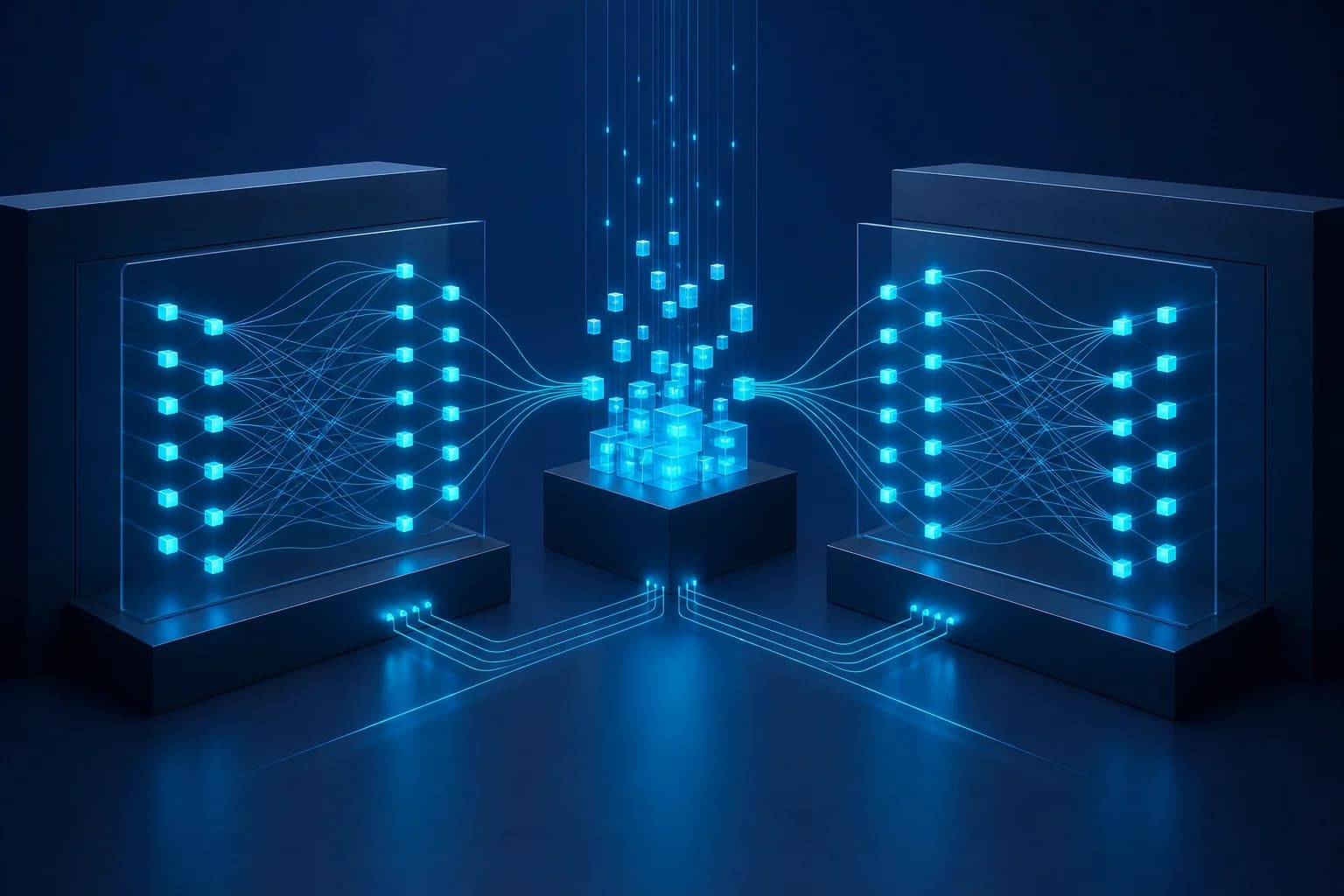
At its core, the Transformer consists of an encoder-decoder structure. The encoder processes input data and generates a sequence of continuous representations, while the decoder translates these representations into outputs. However, it is the self-attention mechanism that truly sets Transformers apart.
Self-attention enables the model to focus on different parts of the input data when making predictions. For instance, in the sentence “The cat sat on the mat,” the model can learn to associate “cat” with “sat” and “mat,” even if they are not adjacent. This mechanism is crucial for understanding context and semantic meaning in language.
Impact on Natural Language Processing
The significance of the Transformer architecture can’t be overstated, particularly in the realm of natural language processing. It has paved the way for models like BERT, GPT, and T5, which have achieved state-of-the-art performance in a myriad of NLP tasks, including sentiment analysis, translation, and text summarization.
For instance, BERT (Bidirectional Encoder Representations from Transformers) enhances context comprehension by looking at words from both left and right perspectives. This bidirectional approach addresses issues that earlier models faced, such as understanding the nuanced meaning of words in different contexts.
On the generative side, GPT (Generative Pre-trained Transformer) has demonstrated an uncanny ability to generate coherent and contextually relevant text, making it a prominent tool in content creation, dialogue generation, and even coding assistance.
Applications Beyond Language
While Transformers initially gained fame in NLP, their potential extends far beyond just text. They have found applications in computer vision, drug discovery, and even music generation. Vision Transformers (ViTs) adapt the core principles of the architecture to process images effectively. By treating images as sequences of patches, ViTs embody the flexibility and power of Transformers in fields typically dominated by CNNs.
In drug discovery, Transformers have been employed to predict molecular interactions, revolutionizing the speed and accuracy with which researchers can identify potential pharmaceuticals. The music industry, too, has embraced this technology, with models training on vast datasets to generate original compositions that mimic human creativity.
Challenges and Future Prospects
Despite their impressive capabilities, Transformers are not without challenges. Their reliance on large datasets for training raises concerns regarding data bias, ethical considerations, and the environmental impact of extensive computational resources. Furthermore, the complexity of these models can make them opaque, leading to difficulties in interpretability and trust.
The future, however, appears bright. Ongoing research is aimed at overcoming these challenges through techniques such as model distillation, which reduces the size of models while maintaining performance, and refining training processes to minimize bias. Innovations like sparse attention reduce the computational demand, enabling even broader application.
A Paradigm Shift in AI
The introduction of Transformer architecture represents a significant paradigm shift in artificial intelligence. By harnessing attention mechanisms and enabling faster training and better understanding of context, Transformers have the potential to reshape numerous industries and applications. From language translation and content generation to drug discovery and beyond, the transformative power of this architecture cannot be understated.
As researchers and practitioners continue to explore new frontiers, the hope is that Transformer technology will evolve to be more efficient, interpretable, and ethically aligned with human values. In doing so, the AI revolution ignited by Transformers may lead us to a future where technology and humanity coexist harmoniously, maximizing the benefits of innovation.