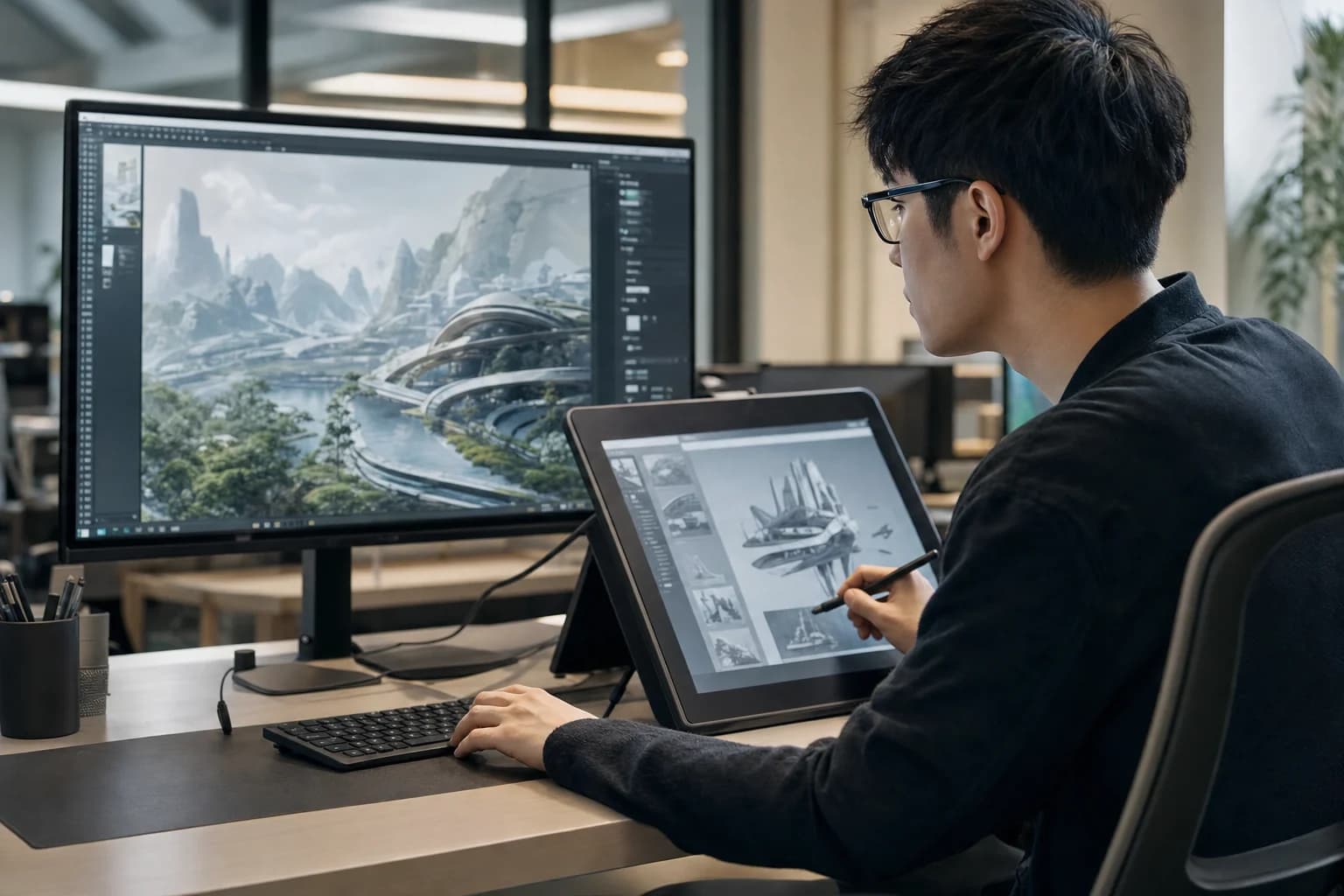
Tencent Holdings has officially released Hy Image 3.5 Preview, a sophisticated image-generation model designed to advance the company’s position as it faces aggressive development from ByteDance and Alibaba Group. According to technical documentation provided by Tencent Cloud, the system introduces significant improvements in text rendering, stylistic expression, and editing consistency compared to its predecessor, Hy Image 3.0.
The model architecture supports a diverse range of multimodal inputs, allowing users to combine text prompts with reference images to guide the generation process. A primary feature of this release is its capacity for multi-round editing, which enables the system to preserve context across successive iterations of a visual asset. This functionality is intended to support complex professional workflows such as product-image editing and poster design that require precise, iterative adjustments.
Technical specifications indicate that the model can process up to 100,000 input tokens for conversational requests, facilitating deeper interaction between the user and the generative engine. The system is capable of producing high-resolution outputs of up to 4,096 by 4,096 pixels. Developers can access the model through the Tencent Cloud TokenHub platform, which provides an application programming interface for specifying custom image dimensions and formats.
Internal performance evaluations conducted by Tencent suggest an overall capability increase of approximately 30 percent over the previous generation. The company reports that its internal testing among in-house designers placed the model’s performance on a level comparable to ByteDance’s Seedream 5.0 Pro. These assessments also claimed the model slightly exceeded the performance of Google’s Nano Banana Pro and Alibaba’s Qwen-Image-3.0 Pro in specific visual-generation tasks.
Tencent has integrated the model into its existing software services, including the Yuanbao chatbot, WorkBuddy, and various creative and productivity tools. The deployment strategy reflects a broader corporate shift toward embedding visual-generation capabilities directly into enterprise-facing services. This move aligns with the company’s ongoing investment in its Hunyuan model family, which utilizes a mixture-of-experts architecture to optimize computational efficiency.
The development of this model is overseen by a strengthened research team, including computer-vision specialist Tian Yonglong, who joined Tencent in July to lead vision-language model development. The integration of such expertise signals a strategic focus on refining the underlying mechanisms of vision-language models rather than relying solely on scale. By emphasizing professional visual production over consumer-facing image generation, Tencent aims to capture a larger share of the enterprise market for automated design systems.
The release occurs as major Chinese technology firms intensify their efforts to move beyond large language models into more specialized visual and agent-based systems. This environment has driven rapid innovation cycles, with firms like Alibaba and ByteDance simultaneously expanding their own proprietary image-generation suites and supporting infrastructure. The current focus on iterative production suggests that the next phase of competition will be defined by the ability of models to maintain long-term coherence during complex, multi-stage creative tasks.
Market observers note that the success of these systems will depend on the transparency of their performance benchmarks and the robustness of their integration into existing cloud infrastructure. As Tencent continues to scale its AI research, the industry will monitor whether the performance gains observed in internal evaluations can be replicated in independent, third-party testing environments. Future updates to the Hy Image series will likely prioritize further enhancements to prompt rewriting and external search integration to improve the accuracy of complex visual outputs.
The shift toward professional-grade visual tools indicates that Tencent is prioritizing utility for business users who require consistent, repeatable results. By allowing users to carry generated images forward into later editing rounds, the model reduces the need for repeated polling requests and streamlines the creative pipeline. This technical focus on workflow efficiency is a critical differentiator in a market currently saturated with single-prompt generators.