LLMsai native
SAIC Roewe Deploys Native Large Model Architecture in Jia Yue 07
The new Jia Yue 07 integrates the Doubao Cockpit Assistant into a proprietary AI-native architecture to enhance real-time vehicular decision-making.
4 min read
The new Jia Yue 07 integrates the Doubao Cockpit Assistant into a proprietary AI-native architecture to enhance real-time vehicular decision-making.
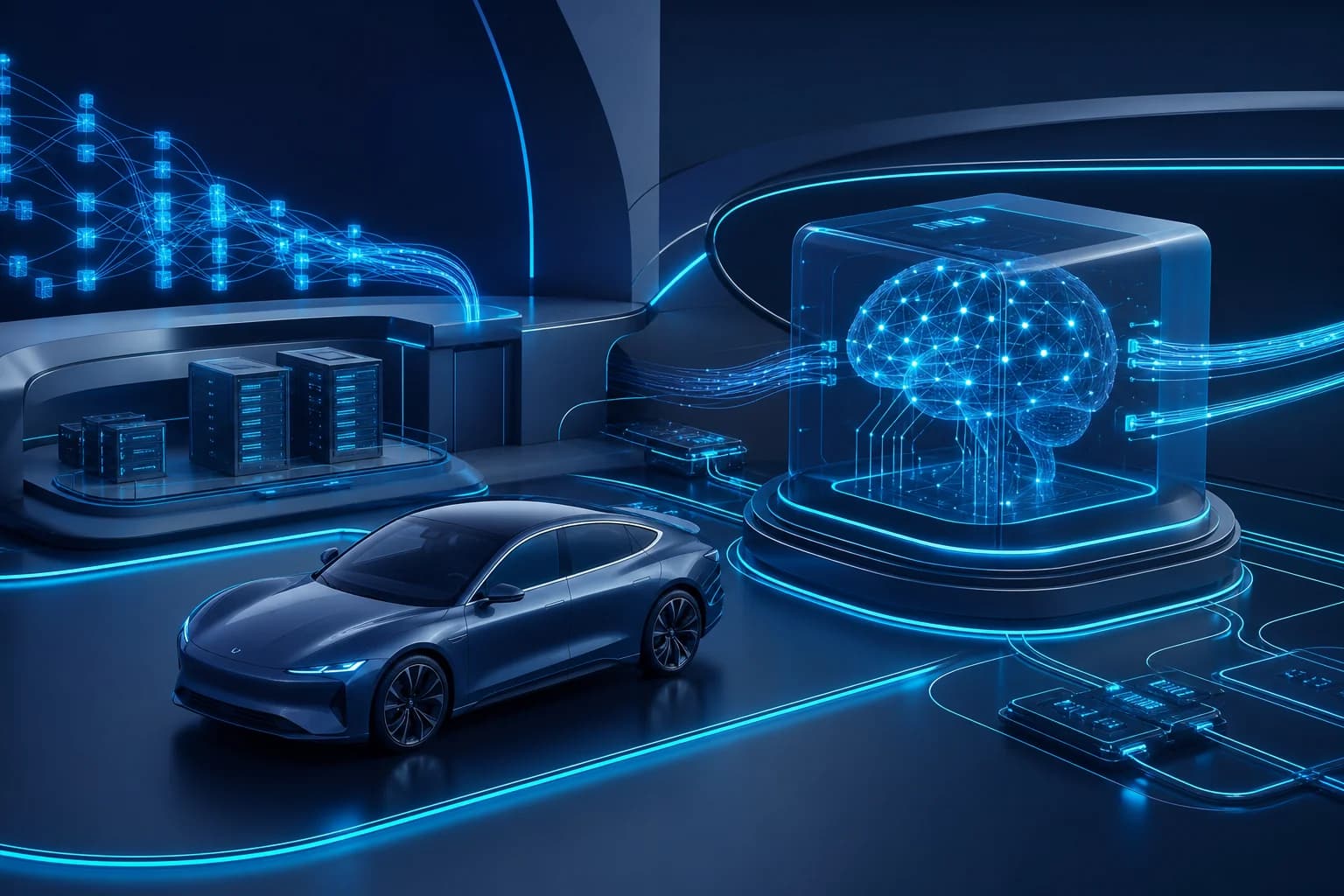
SAIC Roewe officially integrated the Doubao Cockpit Assistant into its newly announced Jia Yue 07 model on September 17, marking a transition from traditional voice-command interfaces to deep-learning-native vehicular control.
According to a press release from SAIC Motor, the Jia Yue 07 utilizes the proprietary CPP AI-native architecture to facilitate high-bandwidth data exchange between the Doubao large model and the vehicle’s internal control systems.
This structural design allows the model to process hundreds of real-time vehicle signals directly within its inference loop. By embedding the assistant into the perception-decision-execution pipeline, the system achieves a level of integration that surpasses standard API-based AI implementations.
The architecture supports multimodal emotion recognition, which requires the synchronization of disparate data streams including acoustic inputs and sensor telemetry. This multi-task execution capability relies on the underlying infrastructure provided by ByteDance’s Volcano Engine.
The system architecture enables the model to influence vehicle navigation, driver-assistance systems, and broader user ecosystem parameters with low latency. SAIC Motor reports that this deep-thinking model approach has demonstrated significant efficacy in previous deployments, such as the Roewe M7 DMH.
Following that implementation, the utilization rate of voice-based functions increased from 60% to 90% among the user base. The current operational scale for the Doubao large model involves daily token calls exceeding 120 trillion, indicating a high volume of inference processing.
Public records show the partnership between Roewe and the Doubao large model began in April 2025. SAIC Motor President Jia Jianxu and Volcano Engine Automotive General Manager Yang Liwei jointly announced the collaboration to advance in-car intelligence.
This deployment highlights the industry trend toward incorporating large-scale transformer models directly into the automotive software stack. The partnership underscores the strategic focus on proprietary model training for specialized automotive environments.
Volcano Engine has expanded its influence in this sector by securing similar in-car AI partnerships with manufacturers including Dongfeng, Chery, Seres, and Tesla China. These collaborations focus on the technical challenge of optimizing large model inference for the resource-constrained environment of an automotive cockpit.
The shift toward AI-native architectures suggests that manufacturers are prioritizing the reduction of latency in the decision-making loop. By moving beyond simple natural language processing, these systems aim to provide context-aware responses based on the vehicle’s operational state.
Future iterations of this technology will likely involve further refinement of the model’s ability to handle complex, multi-modal sensor inputs simultaneously. The upcoming release of SAIC Audi models will serve as a critical test for the scalability of the CPP architecture across different vehicle platforms.
Researchers monitoring these deployments will focus on the model’s performance stability and the efficacy of its decision-making logic under diverse driving conditions. The industry remains in a phase of experimentation regarding the optimal balance between cloud-based inference and edge-based processing for automotive AI.
The Jia Yue 07 pre-sales begin on September 21, providing the first real-world dataset for this integrated architecture. Observers will watch for performance benchmarks regarding the model’s response time during high-load scenarios.
Engineers are particularly interested in how the CPP architecture manages memory allocation when the Doubao model handles multiple concurrent requests from the navigation and driver-assistance modules. The efficiency of the perception-decision-execution loop remains a primary metric for determining the success of AI-native integration in production vehicles.
As the automotive sector moves toward higher levels of autonomy, the ability of the cockpit assistant to interpret sensor data in real-time becomes a critical component of the overall vehicle safety architecture. The performance of these models under varied environmental conditions will dictate the pace of future adoption across the broader SAIC portfolio.
The integration of the Doubao large model represents a significant evolution in the way vehicles process user intent and environmental data. By moving away from modular, disconnected systems, the Jia Yue 07 sets a new standard for how manufacturers might approach the development of intelligent, responsive automotive environments.


