Dr. Neda Azarmehr, a lecturer in Data Science and AI at the University of Sheffield, is currently spearheading research into the integration of multimodal artificial intelligence for clinical decision-making. Her work focuses on the intersection of computer vision, deep learning, and medical imaging, aiming to enhance diagnostic precision through technically rigorous computational models.
Her research portfolio includes the development of lightweight deep neural network architectures designed for real-time echocardiography view detection. As detailed in the journal Computers in Biology and Medicine, these models utilize speckle tracking and automated segmentation techniques to facilitate the quantification of cardiac function with high spatial and temporal resolution. These efforts often involve the application of neural architecture search to optimize performance on resource-constrained hardware, such as portable ultrasound systems.
In the domain of oncology, Azarmehr has contributed to the development of digital pathology scoring systems that predict malignant transformation in oral epithelial dysplasia. Her methodology, published in The Journal of Pathology, involves the segmentation of epithelium and nuclei, utilizing advanced computer vision frameworks to analyze histopathological variability. This research, supported by Cancer Research UK, emphasizes the transition from manual histopathology to automated, data-driven diagnostic pipelines.
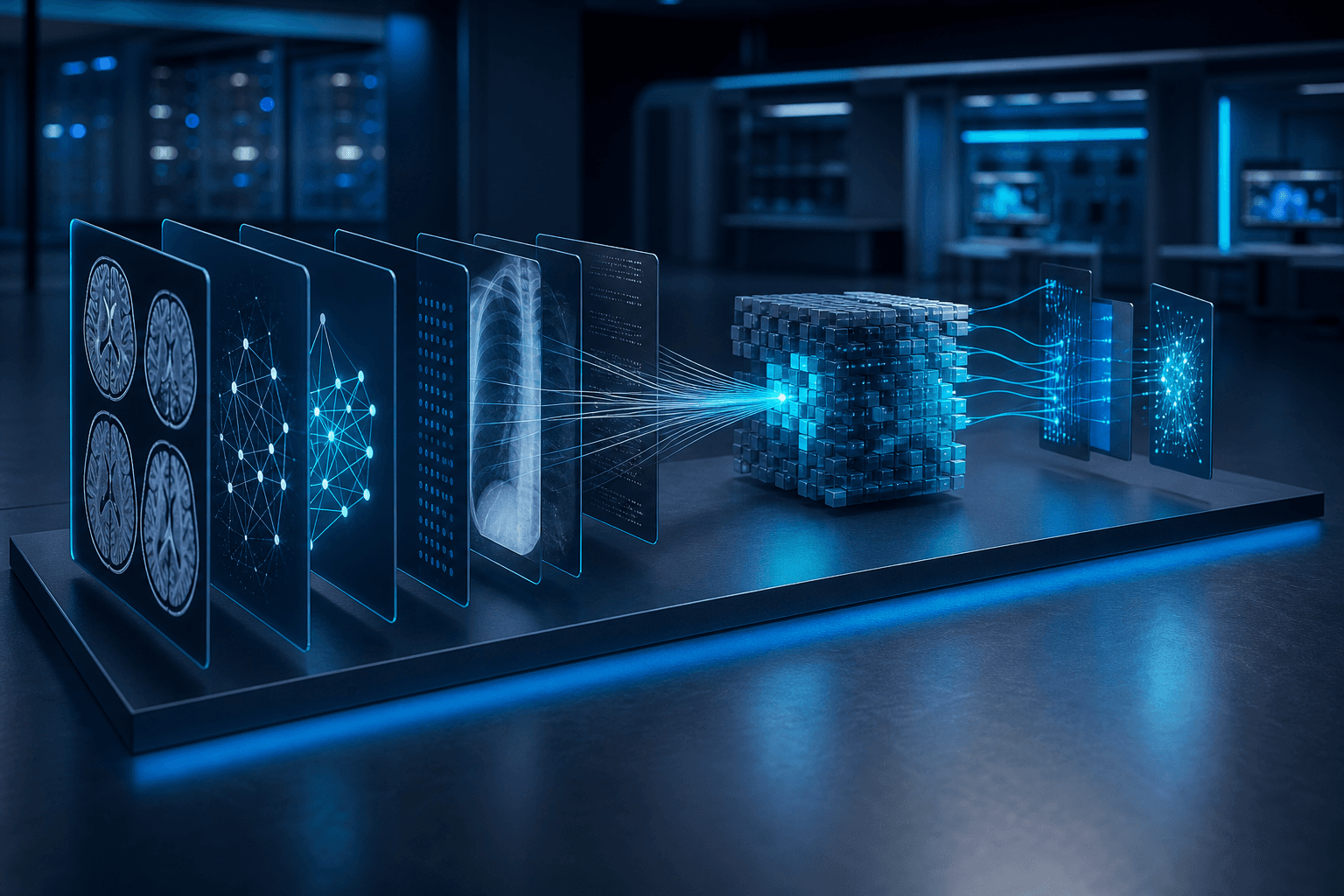
The integration of multimodal data remains a cornerstone of her current investigations, where imaging data is synthesized with clinical and genomic information. This approach seeks to reveal complex biological patterns that remain obscured in unimodal datasets, thereby supporting the development of personalized treatment strategies. Her work also explores the utility of generative models, specifically diffusion models and GANs, to mitigate the challenges posed by data scarcity in medical imaging, as noted in her recent conference contributions.
Azarmehr is also focused on the deployment of AI algorithms within image-guided intervention systems, including robotic surgery and biopsy procedures. By integrating real-time feedback loops into these systems, she aims to increase the accuracy of minimally invasive procedures. Her technical approach prioritizes the development of models that are not only computationally efficient but also robust enough for deployment in clinical environments.
Her work on active learning for left ventricle segmentation, published in Computer Methods and Programs in Biomedicine, demonstrates a commitment to reducing the annotation burden for clinicians. By employing iterative optimization-based approaches, she ensures that the models learn from the most informative samples, utilizing cross-entropy loss functions and specialized convolutional layers to improve convergence rates and predictive accuracy in echocardiographic analysis. This systematic approach to model training is essential for the scalability of AI solutions in high-throughput clinical settings.
A significant portion of her research addresses the critical need for trustworthy AI, specifically regarding algorithmic bias and interpretability. She investigates methods to identify and mitigate latent biases within training datasets, ensuring that diagnostic tools maintain equitable performance across diverse patient populations. This commitment to explainable AI frameworks is intended to provide clinicians with the transparency required to adopt these systems in high-stakes medical settings.
The broader impact of these advancements lies in the potential to standardize diagnostic workflows across various imaging modalities. By shifting the focus toward lightweight, interpretable, and multimodal architectures, researchers can address the current limitations of black-box models in healthcare. This transition is essential for the integration of AI into clinical practice, where reliability and explainability are as significant as raw predictive accuracy.
Future developments in this field will likely hinge on the successful deployment of these models in resource-constrained environments, where portable diagnostic tools are most impactful. The continued refinement of active learning techniques and the expansion of multimodal integration will serve as primary watchpoints for the next generation of clinical AI research. These milestones will determine the scalability of automated diagnostic systems within global healthcare infrastructures.