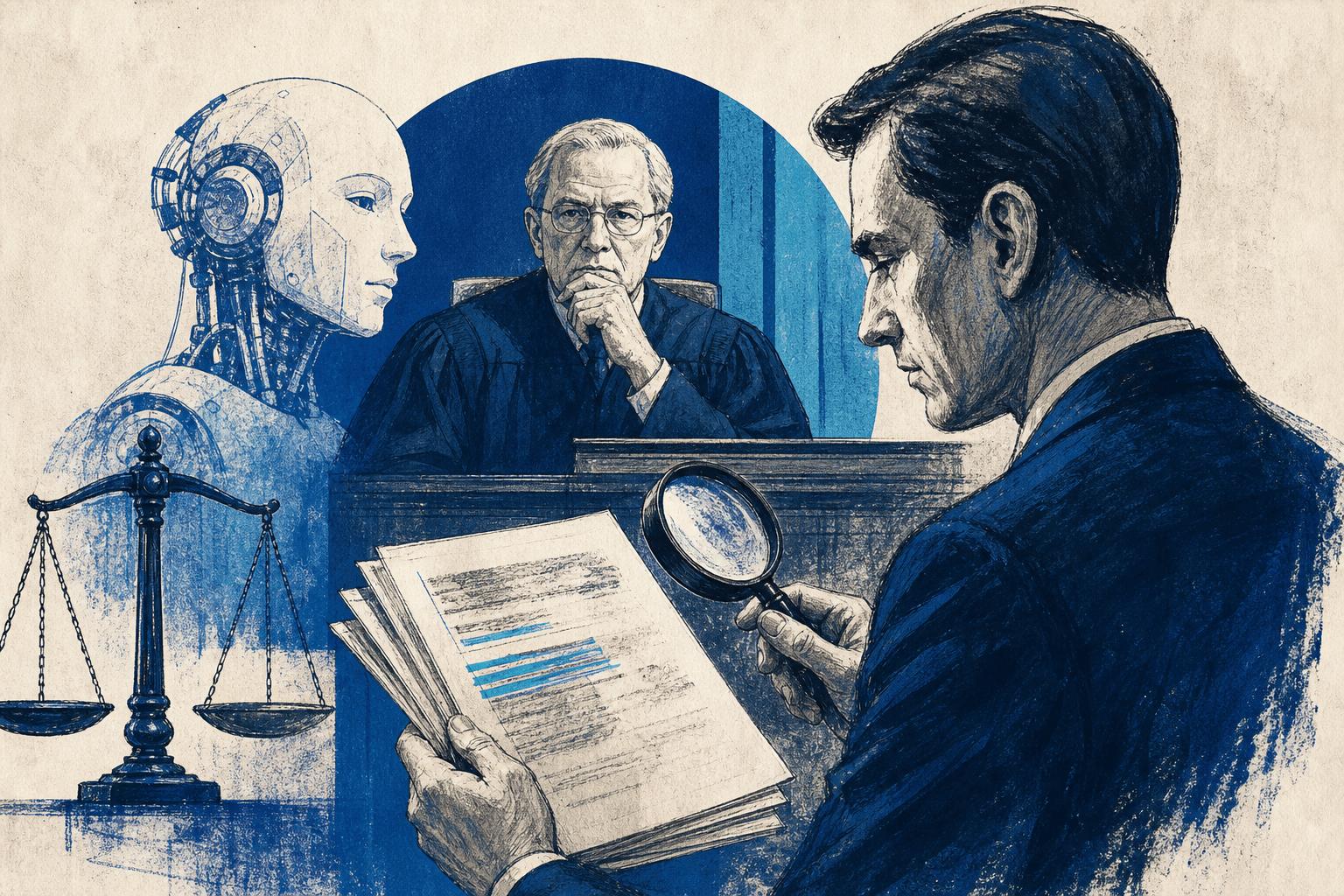
The Indiana Supreme Court has introduced a rigorous regulatory framework under Cause No. 26S-MS-8, effectively imposing strict liability on attorneys for the submission of fabricated legal citations. Effective August 1, 2026, the revised Rule 11.1 mandates that any signature on a court filing serves as a formal certification that all cited legal authority is authentic, regardless of whether the attorney possessed actual knowledge of the fabrication.
This policy shift addresses a growing trend of disorganized and voluminous filings that incorporate fictitious case law generated by large language models. By removing the requirement to prove intent, the court has established a standard where the mere presence of a hallucinated citation constitutes a violation of professional conduct. The rule explicitly encompasses any material produced through artificial intelligence, internet research, or other automated research resources.
Under the companion Rule 11.2, trial courts are empowered to designate attorneys as abusive litigants if their conduct involves the citation of fictitious authority. This designation triggers a suite of eleven potential remedial measures, including mandatory perjury-backed certifications for future filings and the imposition of specific page-citation requirements. Judges retain the authority to levy sanctions such as dismissal with prejudice, assessment of expenses, and the awarding of attorney fees directly against the legal practitioner.
The procedural changes extend to deposition practices through the amendment of Rule 30(B)(2). Attorneys asserting that a witness will imminently depart the jurisdiction must now certify the factual basis of that claim as true. Any subsequent discovery of a false certification subjects the attorney to the disciplinary mechanisms outlined in Rule 11(C).
These developments reflect a broader national movement toward codifying AI-related professional responsibilities within the judiciary. Florida implemented similar requirements on June 15, 2026, mandating that signatories verify the existence and accuracy of all cited legal authorities. New York has adopted 22 NYCRR Part 161, which requires independent confirmation that work product contains no fabricated statutes or case material.
California is currently considering legislative action via SB574, which would require attorneys to disclose the use of generative AI in litigation materials. According to the Ropes & Gray legal AI governance tracker, 18 states have already enacted specific court-ordered rules regarding AI-use verification or disclosure. The rapid adoption of these policies indicates a systemic transition from voluntary ethical guidelines to mandatory compliance frameworks.
The shift toward strict liability underscores the inherent risks associated with the non-deterministic nature of current generative models. Because large language models often prioritize probabilistic token generation over factual accuracy, the burden of verification remains firmly with the human operator. Legal professionals must now integrate robust, deterministic validation layers into their document workflows to ensure that all citations are cross-referenced against verified databases like Westlaw or Lexis.
The technical challenge lies in the discrepancy between the training objectives of foundational models and the precision required for legal practice. While these models excel at pattern recognition and linguistic synthesis, they lack the internal mechanisms to distinguish between authentic legal precedent and plausible-sounding fabrications. Consequently, the legal community is forced to treat all AI-generated outputs as untrusted data until validated by external, ground-truth verification systems.
This regulatory environment necessitates a fundamental change in how law firms manage their research infrastructure. Future litigation will likely see an increased reliance on specialized verification tools that perform automated lookups against official court dockets. As jurisdictions continue to sharpen their sanctions, the cost of failing to implement these technical safeguards will likely manifest in both financial penalties and long-term reputational damage for legal practitioners. The legal industry must now reconcile the efficiency gains of large language models with the absolute requirement for factual precision in judicial filings.
The ongoing evolution of these rules suggests that state courts will continue to tighten oversight as AI tools become more integrated into daily legal practice. Attorneys should anticipate that future judicial scrutiny will focus not only on the final output but also on the internal verification processes used to produce those documents. Maintaining a defensible audit trail of research will become a standard component of professional competence in the era of generative AI.