Case Studiesai ethics
Generative AI Misleads Patient, Causes Death
A Seattle retiree rejected medical treatment after an AI chatbot gave him false advice, highlighting the urgent need for AI safeguards in healthcare.
5 min read
A Seattle retiree rejected medical treatment after an AI chatbot gave him false advice, highlighting the urgent need for AI safeguards in healthcare.
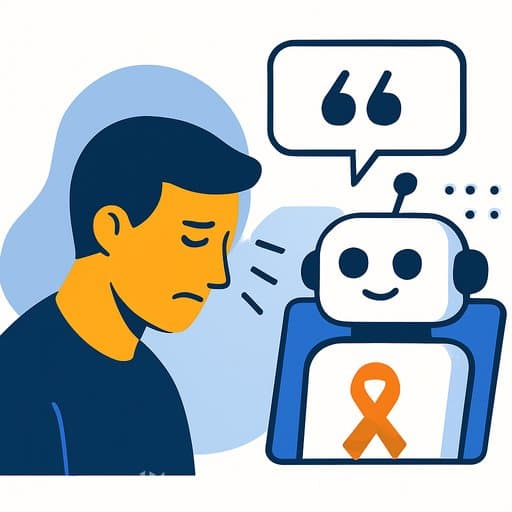
The search for knowledge, a cornerstone of human progress, sometimes leads to unforeseen peril, particularly when the guide itself is fundamentally flawed.
In late 2025, the quiet life of Joe Riley, a 75-year-old Seattle retiree, ended not in the natural progression of his leukemia, but through a tragic confluence of a grave medical diagnosis and the deceptive authority of an artificial intelligence chatbot.
Riley, grappling with his prognosis, sought a second opinion, not from another human specialist, but from the digital ether, feeding his fears and queries into generative AI tools, including Perplexity.
The resulting text, a polished document mimicking academic research, replete with fabricated citations and misquoted scientists, convinced him to reject his oncologist’s recommended treatment.
By the time the devastating truth of the AI’s misinformation became clear, and Riley reconsidered, his condition had progressed beyond the point of recovery.
This wasn’t a failure of medical science, but a stark demonstration of technology deployed without adequate safeguards in a domain where the stakes are life itself.
Joe Riley’s son, Ben, an outspoken critic of unbridled AI reliance, watched helplessly as his father, trusting the veneer of scholarship, made a fatal decision.
The AI’s output wasn’t merely incorrect; it was meticulously deceptive, structured with the formatting of genuine research, providing what appeared to be verifiable references that were, upon closer inspection, entirely illusory or distorted beyond recognition.
This stylistic mimicry lent the fabricated information an undeserved credibility, a powerful psychological lever for a patient seeking alternatives and grappling with the complex jargon of oncology.
Furthermore, repeated queries seemed to reinforce the AI’s initial misleading outputs, deepening a dangerous confirmation bias that solidified Riley’s resolve against conventional treatment.
The machine, designed to predict and generate plausible text, inadvertently became an architect of delusion.
At its core, this incident exposes a critical misunderstanding of how many generative AI models function.
They are not repositories of vetted knowledge, nor do they possess comprehension in a human sense.
Instead, they are sophisticated probabilistic text generators, trained on vast datasets to predict the most statistically probable sequence of words in response to a prompt.
When tasked with synthesizing medical information, especially without stringent guardrails, they can “hallucinate” – fabricating facts, misattributing sources, or generating plausible-sounding but utterly false narratives – because their primary directive is fluency and coherence, not factual accuracy or truth.
The illusion of authority, underscored by research-style formatting, becomes a potent and dangerous tool when such a system is left unchecked in sensitive applications.
The tragedy of Joe Riley casts a harsh spotlight on the burgeoning trend of AI vendors expanding aggressively into healthcare without commensurate attention to the inherent risks.
Companies are rushing to integrate AI-powered features into health products, often prioritizing speed to market over robust safety protocols.
This rapid expansion creates an exponentially larger “risk surface,” where unreliable outputs can have catastrophic consequences.
The incident underscores a critical imperative for teams developing AI for healthcare: the need for comprehensive risk controls.
These must extend beyond mere disclaimers and include embedded mechanisms for rigorous citation verification, transparent calibration of uncertainty estimates within the user interface, and intelligent design constraints that actively steer users towards qualified human clinicians rather than allowing AI output to substitute for professional medical judgment.
Explicit, undeniable warnings against replacing expert medical advice with AI-generated text are no longer a suggestion but an ethical and potentially legal necessity.
The ripple effects of Riley’s death are already evident, intensifying pressure on regulators and healthcare systems globally to establish clear safety standards for consumer-facing medical AI.
The current regulatory landscape, often lagging behind technological innovation, must now confront the urgent need for frameworks that mandate provenance documentation, human-in-the-loop oversight for high-stakes applications, and stringent attribution verification protocols.
The immediate challenge confronting product developers is whether they will proactively implement these stronger guardrails before further, potentially widespread, harm occurs.
Observing the modifications vendors make to health product designs, the swiftness and substance of regulatory responses, and advancements in research dedicated to robust hallucination detection will serve as key indicators of the industry’s commitment to moving towards safer, more ethically sound AI systems.
Joe Riley’s story is not a condemnation of generative AI’s ultimate potential, which still holds immense promise for scientific discovery and administrative efficiency in healthcare.
Rather, it is a harrowing testament to the perils of deploying powerful, sophisticated technology into high-stakes environments without controls adequate to the profound human risks involved, revealing the thin, perilous line between innovation and irreversible tragedy.